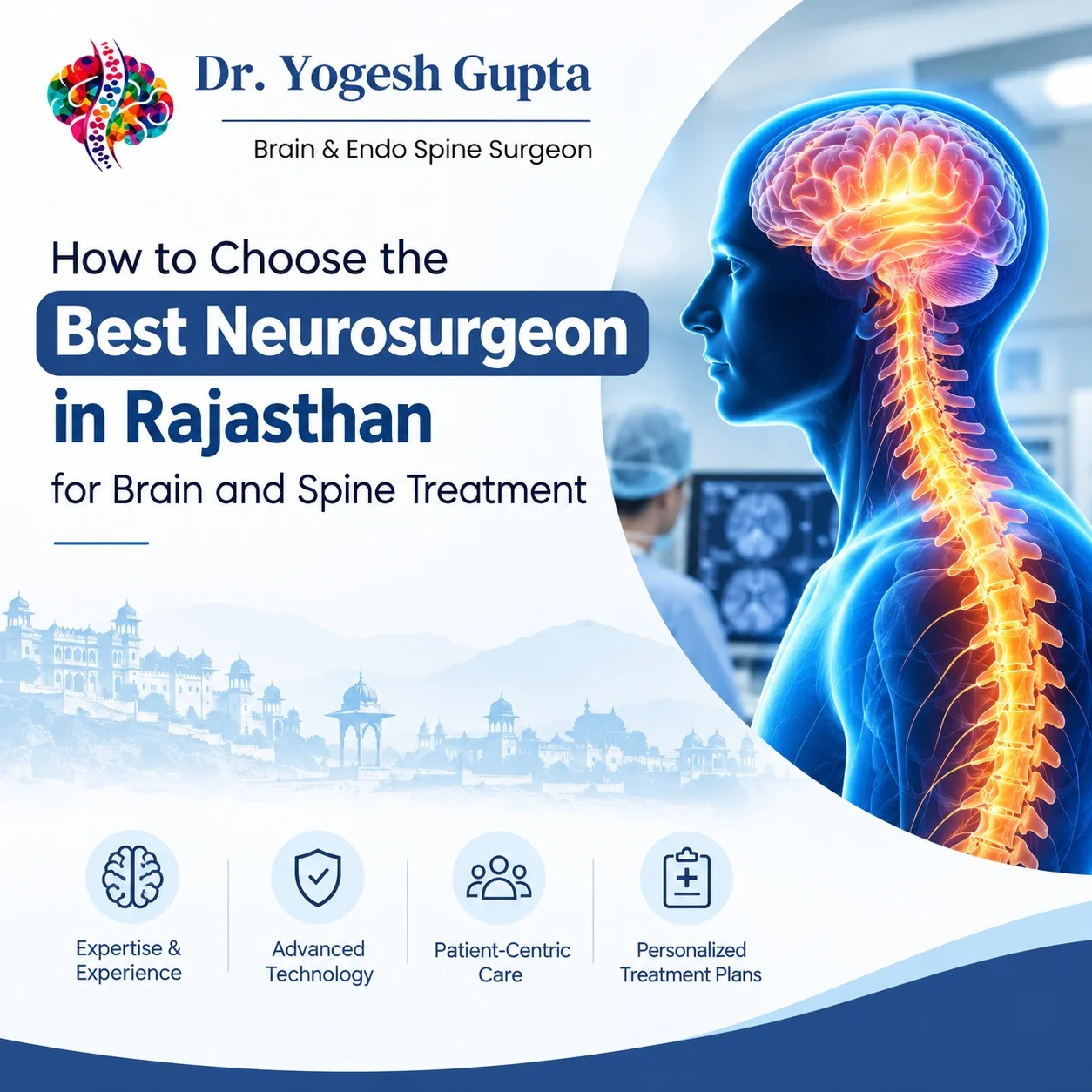
Selection of an appropriate specialist for the treatment of brain and spine disorders is a crucial step for a patient and his or her family members. While looking for the Best Neurosurgeon in Rajasthan, it is important to consider the medical background, the experience in performing operations related to the condition, ways of diagnosing the problem, and treatment alternatives.
A neurosurgeon performs operations on the brain, spine, spinal cord, and nervous system. The form of treatment will depend on the diagnosis and might include medicine, rehabilitation, monitoring, or an operation.
The Best Neurosurgeon in Rajasthan examines and manages a range of diseases related to the brain, spine, spinal cord, and nervous system. Such diseases can be brain tumors, head trauma, disc prolapse, spinal stenosis, nerve compression, and other spinal problems.
The suitable treatment of a problem depends on the signs, physical examination, history of the patient, and diagnostic imaging of the patient. All diseases cannot be treated with surgery.
Choosing a neurosurgeon is not merely about finding the highest ranked surgeon through online reviews or advertising. Below are some things to consider when choosing a neurosurgeon.
Ensure that the doctor has adequate qualifications and specialization in neurosurgery. Also, it is important to know whether the specialist has the capability of managing the health problem in question.
If the health problem is complicated and related to the brain or spine, then such factors become even more important.
It is important that the experience of the surgeon has something in common with the procedure to be carried out and with the patient's diagnosis. Patients need to know more about different treatment options, surgeon's experience and the advantages and disadvantages of each treatment.
Patients require comprehensive information and not just some claims regarding years of experience or amount of procedures performed.
Management can involve drugs, physiotherapy, activity modification, observation, or surgical management depending on the particular disease. It will depend on the nature of the symptoms and how one has responded to treatment.
In cases where minimally invasive procedures are required for certain spine diseases, it is important to know the benefits, limitations, and potential risks involved in each procedure.
Neurosurgery may involve special imaging, surgical theater facilities, anesthetization services, and post-operative care. Some cases may even need ICU care or rehabilitation.
Before you decide on the process, inquire about the facilities, follow-up schedule, recovery plans, and what will be done for any emergencies.
Consultations should provide you with an understanding of your diagnosis as well as the different treatment choices that are available. The surgeon should be able to tell you why certain treatments are being considered and the alternative treatments available. For complicated surgeries, getting a second opinion could also help you make your choice.
While seeking Best Spine Surgeon in Jaipur, one needs to take into account the specialist’s experience of working with your disease, approach to diagnosis, knowledge of the techniques related to your problem, as well as the capability of explaining the procedure.
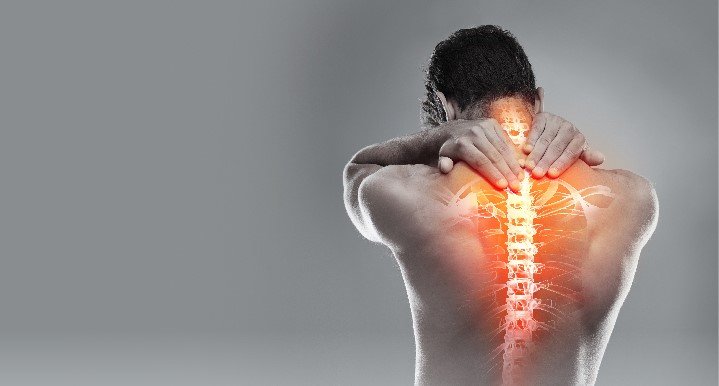
Typical spinal diseases are such as slipped discs, lumbar canal stenosis, degenerative disc disorders, and nerve compression. They can lead to pains in the lower back or neck, to tingling, numbness, and pains which spread from the arms or legs.
MRI can be helpful in finding problems with structure, yet it should be analyzed in combination with symptoms and clinical examination. All hernias of the disc do not require surgery.
In some cases, endoscopic spine surgery can become possible. Find out whether it is appropriate to your specific case, why it should be done, and what the risks or limitations are.
UBIQUITOUS BIPORTAL ENDOCOPIC (UBE SPINE SURGERY) refers to a minimally invasive surgical procedure done to alleviate selected spinal problems. It utilizes two small openings, where the endoscopic camera and surgical tools are inserted respectively. The surgeon performs the surgery while watching the image of the surgical site on a screen.
UBE may be recommended for some specific cases of disc herniation and nerve entrapment when the clinical evaluation suggests that surgery can help. Its appropriateness will depend on the location and type of disc disorder, as well as on symptoms and other factors.
A surgical case featured in a video from Dr Yogesh Gupta's practice illustrates how UBE surgery may be used to address a specific spinal problem.
The video presents a 36-year-old female patient with lower back pain and pain radiating into her right leg. Her MRI is described as showing a downward-migrated disc herniation at the L5-S1 level, with compression of the right S1 nerve root.
The video then shows the planned UBE procedure, surgical preparation, and endoscopic views from the operation. In its later scenes, the patient is shown walking in a hospital corridor with medical staff following the procedure.
This case demonstrates the process of evaluating a disc problem on MRI and using an endoscopic approach in a selected patient. However, one patient's case cannot establish that the same procedure is appropriate for everyone with a slipped disc. The video also does not independently establish long-term recovery or prove that all symptoms are resolved.
Patients considering UBE surgery should discuss their own MRI findings, symptoms, treatment alternatives, possible complications, and expected recovery with a qualified specialist.
Think about getting a medical assessment if you are suffering from chronic and increasing back or neck pain, pain that shoots into your arms and legs, unexpected numbness, muscle weakness, and problems with balance and coordination.
A medical specialist can also be sought if there is an imaging finding of any brain or spinal abnormality requiring evaluation.
Go for urgent assessment if you suddenly feel weakness, facial droopiness, trouble with speech, fainting, or severe headache. Loss of bladder or bowel function along with severe back or leg pain also calls for urgent assessment.
Before deciding on treatment, consider asking:
These questions can help you understand your options and make an informed decision with your treating specialist.
Dr Yogesh Gupta is a neurosurgeon based in Jaipur, Rajasthan. His official website lists his qualifications as MBBS, MS, and MCh in Neurosurgery, along with more than 16 years of professional experience. Patients searching for the Best Spine Surgeon in Jaipur can review his qualifications, clinical experience, and areas of specialization when exploring suitable treatment options.
His stated clinical areas include brain surgery, spine surgery, endoscopic spine procedures, neuro trauma, neuro intervention, and pediatric neurosurgery. His official profile also identifies his association with Priyush Neuro & Super Speciality Hospital in Mansarovar, Jaipur, and Priyush Multispeciality Hospital in Sanganer, Jaipur.
Patients exploring brain or spine treatment can review his qualifications and listed services, discuss their symptoms, and ask which treatment options may be appropriate for their diagnosis.
Selecting a neurosurgeon for your treatment of the brain or spine requires a well thought-out approach in choosing the right person considering qualifications, experience, diagnostic process, treatments, facility of operation, and communication. It is crucial that patients have a clear understanding of their condition, as well as advantages and disadvantages of any recommended procedure.
The UBE spinal surgery case from this article serves as an example of how endoscopic procedure can be used for certain L5-S1 disc herniation and nerve compression. But the right choice of treatment is individual for each patient.
Review the specialist's qualifications, experience with your condition, treatment approach, hospital facilities, and communication style. Ask about the benefits and risks of the proposed treatment before deciding.
Look for relevant experience in managing your spinal condition, careful evaluation of imaging findings, and a clear explanation of surgical and non-surgical options. Ask whether minimally invasive techniques are suitable for your case.
UBE stands for Unilateral Biportal Endoscopy. It is a minimally invasive surgical technique that uses separate portals for a camera and surgical instruments to treat selected spinal conditions.
No. Suitability depends on the disc's location, the symptoms, neurological findings, previous treatment, and overall health. A specialist must evaluate the individual case before recommending surgery.
No. Many disc herniations can initially be managed without surgery. Surgery may be considered when symptoms, nerve compression, clinical findings, and response to other treatments indicate that it is appropriate.
A second opinion can be helpful before major or complex surgery, when several treatment options are available, or when you want another specialist to review your diagnosis and proposed procedure. Do not delay emergency medical care to obtain one.




.jpg)