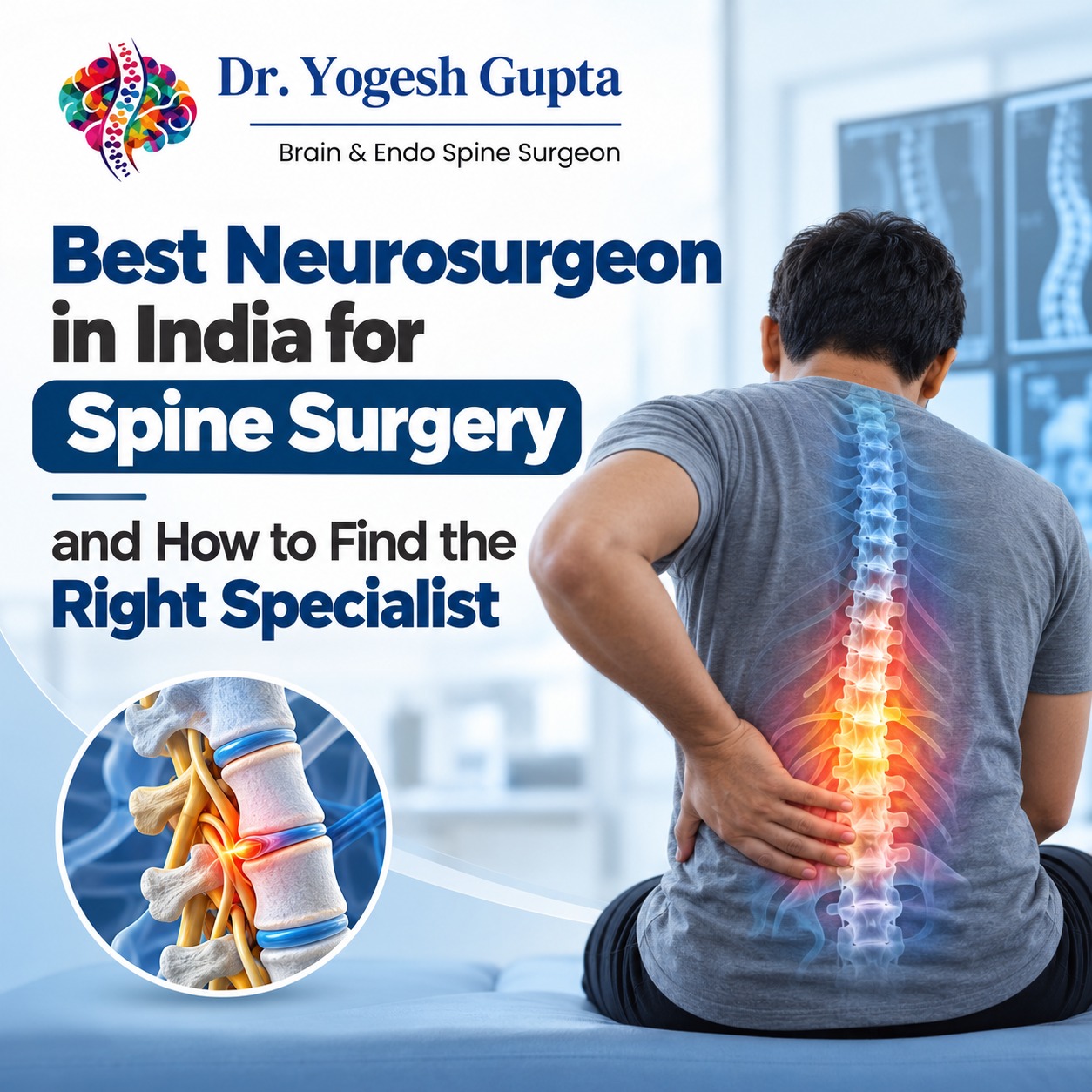
Issues with the spine can impact mobility, comfort, sleeping, and other daily activities. Such disorders as prolapsed discs, spinal stenosis, and nerve impingement can lead to back pains, numbness, tingling sensations, and weakness in arms and legs. The choice of a specialist is an important stage in getting the correct diagnosis and proper treatment.
In the case of searching for the Best Neurosurgeon in India, one should not pay attention only to online ratings and advertisements. It is crucial to take into account such aspects as medical qualifications, experience in the field of certain spine disorders, possible treatment methods, availability of equipment in hospitals, and good communication skills. Finding the Best Spine Surgeon in India is very similar to that.
Spine safeguards the spinal cord as well as facilitates bodily movements. Conditions affecting spinal bones, discs, and nerves may demand expert evaluation. Finding the Best Neurosurgeon in India would be of great help to understand the condition, learn about available treatment, and make a wise decision concerning one’s spine.
Expert neurosurgeons will help to evaluate the neurological signs and symptoms, study the results of diagnostic imaging tests, and determine if conservative treatment or surgical procedure may be advisable. The right kind of therapy depends on the exact condition, its severity, exam findings, and general state of health of the patient.
However, not all problems associated with the spine need to be operated. Quite often, a patient experiences relief due to the use of medications, physiotherapy, change of activities and other non-surgical methods.
Before choosing a neurosurgeon for spine surgery, evaluate the following factors.
Verify the qualifications, specialization, and credentials of the neurosurgeon. Typically, neurosurgeons have undergone training in general medicine and specialize in neurosurgery.
Extra training in endoscopic and minimally invasive spine surgery may be pertinent if such procedures will be undertaken to treat your ailment.
An experienced neurosurgeon should be able to provide you with a clear explanation regarding diagnosis, treatment options, possible benefits, and risks associated with the procedure.
Inquire about the surgeon's experience in treating your specific case, such as herniated disc, lumbar spinal stenosis, nerve compression, or other spinal disorders.
A full evaluation can entail physical and neurological examinations, medical histories, and even imaging studies like MRI or CT scans, if required.
It is up to the surgeon to explain how the results correlate to your symptoms and if further tests or seeking a second opinion might be helpful.
Specialist treatment should incorporate treatment options, expected recovery time, rehabilitation process, and scheduling follow-up appointments. Questions about a treatment plan and its rationale should be encouraged.
Slipped disc is where the disc material bulges out and can cause irritation or compression to the nerves nearby. This condition could be accompanied by symptoms such as backache, neck pain, pain in the legs, tingling, or weakness.
Treatment would consist of medications, physiotherapy, and changes in activities. Surgery would be recommended for selected cases if symptoms persist despite conservative treatment.
The lumbar spinal stenosis is a condition when the spinal canal in the lower spine narrows down and puts pressure on the nerves, leading to pain in the back and legs, numbness, or even difficulty in walking.
Depending on the severity of this condition and how it affects daily functioning, some people will need conservative treatment while others may need surgery.
Compressed spinal nerves may cause pain, altered sensation, or muscle weakness. The location and severity of symptoms help guide further assessment.
Changes with age can also be seen in the spinal disc, joints, and structures around them. Certain individuals may also have spinal tumors and other complicated medical cases.
A correct diagnosis is vital for determining the best course of action.
Use these practical steps when comparing specialists.
1. Verify credentials: Review qualifications and relevant specialist training.
2. Ask about condition-specific experience: Find out whether the surgeon regularly evaluates and treats your diagnosed condition.
3. Understand treatment alternatives: Ask whether non-surgical care is appropriate before considering an operation.
4. Review hospital facilities: Consider available surgical equipment, anaesthesia support, rehabilitation, and emergency care.
5. Discuss risks and recovery: Ask about possible complications, expected hospital stay, activity restrictions, and follow-up.
6. Consider a second opinion: For major or elective spine surgery, another qualified specialist's assessment may help you make an informed decision.
Online reviews may provide information about communication and patient experience, but they cannot independently establish a surgeon's clinical expertise or guarantee an individual outcome.
The appropriate treatment depends on the diagnosis, symptoms, examination findings, imaging, and general health.
It depends on the particular case whether it will require some prescription medicine, physiotherapy, exercise, and activity modification.
There are some conditions which necessitate the need for a surgical process that involves releasing pressure from the nerves or stabilizing the spine.
Minimally invasive surgery of the spine makes use of particular instruments and small incisions for some procedures. Some benefits that could be reaped from this kind of surgery are minimized damage to the tissue surrounding the procedure area.
The endoscopic spine surgery involves the use of a scope together with some tools to reach certain structures within the spine. One of the techniques used is called the Unilateral Biportal Endoscopy (UBE).
According to the website of Dr Yogesh Gupta, the doctor specializes in minimally invasive spine surgery and UBE techniques. The application of an endoscopic technique is determined by the nature of the condition within the spine.
Specialist evaluation is warranted if one experiences prolonged back or neck pain, pain radiating down an arm or leg, numbness, inexplicable muscle weakness, or symptoms that hinder everyday activity.
Immediate medical assessment should be sought if one experiences sudden loss of bladder or bowel control, numbness in the groin or saddle area, or rapid onset of leg weakness. These symptoms could point to more severe nerve compression that needs prompt treatment.
It is essential not to postpone the evaluation of neurological symptoms by self-medicating at home.
Dr Yogesh Gupta is a neurosurgeon based in Jaipur, Rajasthan. His official website lists his qualifications as MBBS, M.S., and M.Ch. in Neurosurgery, and identifies him as a brain and endoscopic spine surgeon.
The website also describes his work in minimally invasive spine surgery, UBE procedures, slipped disc treatment, and lumbar canal stenosis. These details may help patients researching his clinical focus.
When considering Dr Yogesh Gupta or another spine specialist, patients should discuss their diagnosis, available treatment options, the suitability of a proposed procedure, possible risks, and expected recovery during a consultation. A treatment decision should be based on individual medical needs rather than a general ranking.
Prepare these questions for your consultation:
1. What is causing my symptoms?
2. Do I need surgery, or can non-surgical treatment help?
3. What are the benefits and risks of the recommended procedure?
4. Am I suitable for minimally invasive or endoscopic spine surgery?
5. What recovery period and rehabilitation should I expect?
6. What follow-up care will be required?
7. What are the expected treatment costs and possible additional expenses?
Clear answers can help you compare options and make an informed decision.
The selection of Best Neurosurgeon in India for spine surgery involves the evaluation of his or her qualification, experience with your disease, diagnostic skills, treatment options and aftercare process. However, the Best Spine Surgeon in India for your particular case may not be the one who boasts about the highest number of achievements on the Web, but the qualified specialist able to give you evidence-based advice.
Among the specialists to consider in this case is Dr Yogesh Gupta. Consult your neurosurgeon regarding your symptoms, diagnosis and treatment options.
Review specialist qualifications, experience with your condition, treatment options, hospital facilities, communication, and follow-up arrangements. Consider a second opinion for major elective surgery when appropriate.
Neurosurgeons specialize in surgery involving the nervous system, including the brain, spinal cord, and spinal nerves. Orthopedic spine surgeons specialize in musculoskeletal conditions of the spine. Both may treat selected spinal disorders, depending on their training and expertise.
Many slipped discs improve with non-surgical treatment. Surgery may be considered for persistent disabling symptoms, significant nerve compression, or certain progressive neurological problems. The decision requires clinical assessment.
No. Suitability depends on the diagnosis, spinal anatomy, severity of the condition, overall health, and the surgeon's assessment. Some conditions require a different approach.
Look for recognized medical qualifications, relevant specialist training, appropriate registration, and experience treating the condition under consideration.
Bring previous medical reports, imaging scans, a list of medicines, relevant medical history, and notes about your symptoms. Prepare questions about diagnosis, treatment alternatives, risks, costs, and recovery.
Ask why surgery is recommended, what alternatives are available, what benefits and complications are possible, how long recovery may take, and what follow-up care will be needed.





.jpg)